Google Will Call Your Business. Are You Ready to Answer a Robot?
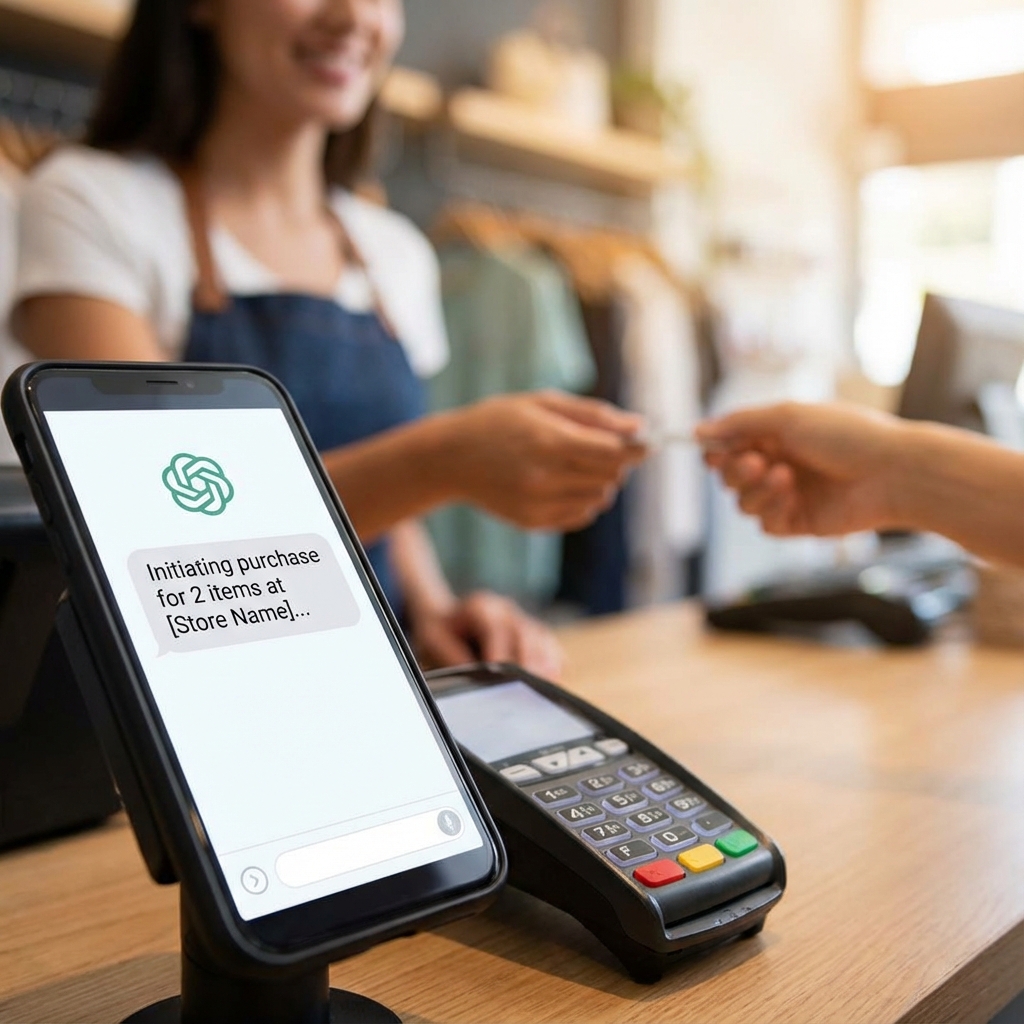
Google's AI now calls stores to check inventory. Walmart tests sponsored prompts in its shopping assistant. Visa announces infrastructure for agentic commerce.
The pattern is clear.
AI is moving from assistant to actor. From answering questions to making decisions. From suggesting products to completing purchases.
The question for service businesses: are you ready to be called by a robot?
The Shift Nobody Saw Coming
Google's "Let Google Call" feature does exactly what it sounds like. You ask Google where to find a product. Google calls multiple stores, talks to employees, confirms inventory, checks prices, reports back to you.
Real phone calls. Real conversations. Real business impact.
This is agentic commerce. AI systems that can search, evaluate, negotiate, and complete transactions without human intervention.
Visa calls it the next wave of commerce. AWS says 65% of organizations are piloting AI agents right now. Gartner predicts 15% of daily work decisions will be made autonomously by AI agents in 2026.
That's not a future prediction. That's eight months from now.
The Infrastructure Problem Most Businesses Don't See
For 30 years, eCommerce focused on keeping bad bots out. Fraudsters, scrapers, malicious traffic.
Now the challenge flips.
You need to let the good bots in. The ones representing real buyers with real intent. The ones that will call your business, evaluate your offering, and make purchasing decisions on behalf of consumers.
But here's the constraint most service businesses face: your systems were built for humans, not agents.
Your phone system assumes a person will answer. Your inventory tracking assumes someone will manually update it. Your pricing assumes negotiation happens in real-time with a salesperson.
When Google's AI calls and gets voicemail, outdated information, or "I'll have to check and call you back," you just lost to the competitor whose systems were ready.
Three Camps Are Forming Right Now
Visa sees the market splitting into three groups:
The Embracers: Businesses treating AI agents as a new discovery and sales channel. They're updating systems, ensuring data accuracy, making themselves agent-accessible.
The Rethikers: Established businesses realizing traditional acquisition strategies no longer work when AI agents control traffic flow. They're recalculating economics and rebuilding funnels.
The Protectors: Companies focused on margin protection and fraud prevention, treating AI agents as threats to control rather than opportunities to capture.
Which camp are you in?
More importantly: which camp can your infrastructure support?
The Real Constraint: Readiness, Not Technology
The technology exists. Google proved it. Walmart is testing monetization. Visa built the payment infrastructure.
The constraint is operational readiness.
Can an AI agent get accurate information from your business right now? Can it complete a transaction without human intervention? Can it access your inventory, pricing, availability in real-time?
For most service businesses, the answer is no.
Your website might look modern, but your backend processes still require manual handoffs. Your CRM might be sophisticated, but it doesn't connect to your scheduling system. Your pricing might be competitive, but it's not accessible to automated systems.
You have a discoverability constraint. AI agents can't find you, evaluate you, or transact with you because your infrastructure wasn't built for this.
What This Means for Your Business in 2026
The shift is already happening. AI-driven traffic to U.S. retail sites surged 4,700% recently. These aren't scrapers or fraudsters. They're agents representing real buyers.
If your business relies on being found, evaluated, and chosen, you need to answer three questions:
1. Can AI agents access your information?
Is your inventory accurate and updated? Are your business hours current? Is your pricing visible and clear? Can an automated system get this information without calling a human?
2. Can AI agents transact with you?
Can someone book an appointment, request a quote, or initiate a purchase without human intervention? Or does every interaction require manual follow-up?
3. Can AI agents verify you?
Visa's infrastructure helps merchants verify legitimate agents and block malicious bots. But you need systems that can participate in that verification process.
Most service businesses can't answer yes to any of these questions.
That's the constraint. And it's costing you opportunities right now.
The Strategic Response: Infrastructure Before Marketing
The businesses that win in agentic commerce won't be the ones with the best marketing. They'll be the ones with the most accessible, accurate, transaction-ready infrastructure.
This requires systematic thinking:
Identify where agents will interact with your business. Phone calls, website inquiries, booking systems, pricing requests. Map every potential touchpoint.
Audit what information agents can currently access. Is it accurate? Updated? Complete? Or are there gaps that require human intervention?
Eliminate manual handoffs that block automated transactions. Every place a human needs to "check and get back to you" is a place you lose to competitors with better infrastructure.
Build verification and trust signals. AI agents need to confirm you're legitimate, capable, and reliable. Your digital presence needs to support that evaluation.
This is constraint elimination work. Systematic, unsexy, foundational.
But it's what separates businesses that thrive in agentic commerce from businesses that become invisible to AI-driven buyers.
The Window Is Closing Faster Than You Think
Google's feature is live. Walmart is testing monetization. Visa built the infrastructure. AI agents are calling businesses right now.
The businesses that prepare their infrastructure today will capture the AI-driven demand tomorrow.
The businesses that wait will watch opportunities go to competitors whose systems were ready.
You can't market your way out of an infrastructure constraint.
You need systematic diagnosis of where your business is accessible to AI agents, where it's not, and what needs to change.
That's not a technology problem. It's a strategic constraint problem.
And it needs to be solved before the next wave of AI agents starts making purchasing decisions on behalf of your potential customers.
What to Do Next
If you're wondering whether your business is ready for agentic commerce, start with a simple test:
Could an AI agent successfully interact with your business right now? Could it get accurate information, evaluate your offering, and complete a transaction without human intervention?
If the answer is no, you have an infrastructure constraint that's limiting your discoverability and accessibility.
I'm currently accepting 2 businesses this month for my 2-Week AI Opportunity Assessment. We'll map your operational constraints, identify where AI agents will interact with your business, and create a strategic roadmap for infrastructure readiness.
This is normally a $10,000 engagement. I'm offering it complimentary in exchange for case study documentation.
Interested? Let's talk about whether your business is ready for the agentic commerce wave that's already here.


